
AI citation readiness score
See whether a page has the content structure, source signals and trust cues that make it easier to quote.
Browser Extension - AI SEO and GEO Auditor
CiteReady checks the current page for SEO foundations, schema, source signals, trust cues, llms.txt hints and AI-readable content structure before you publish.
Built for founders, marketers, SEO operators, writers and agencies preparing content for search engines and AI answer engines. The audit runs locally in Chrome with no remote AI calls.
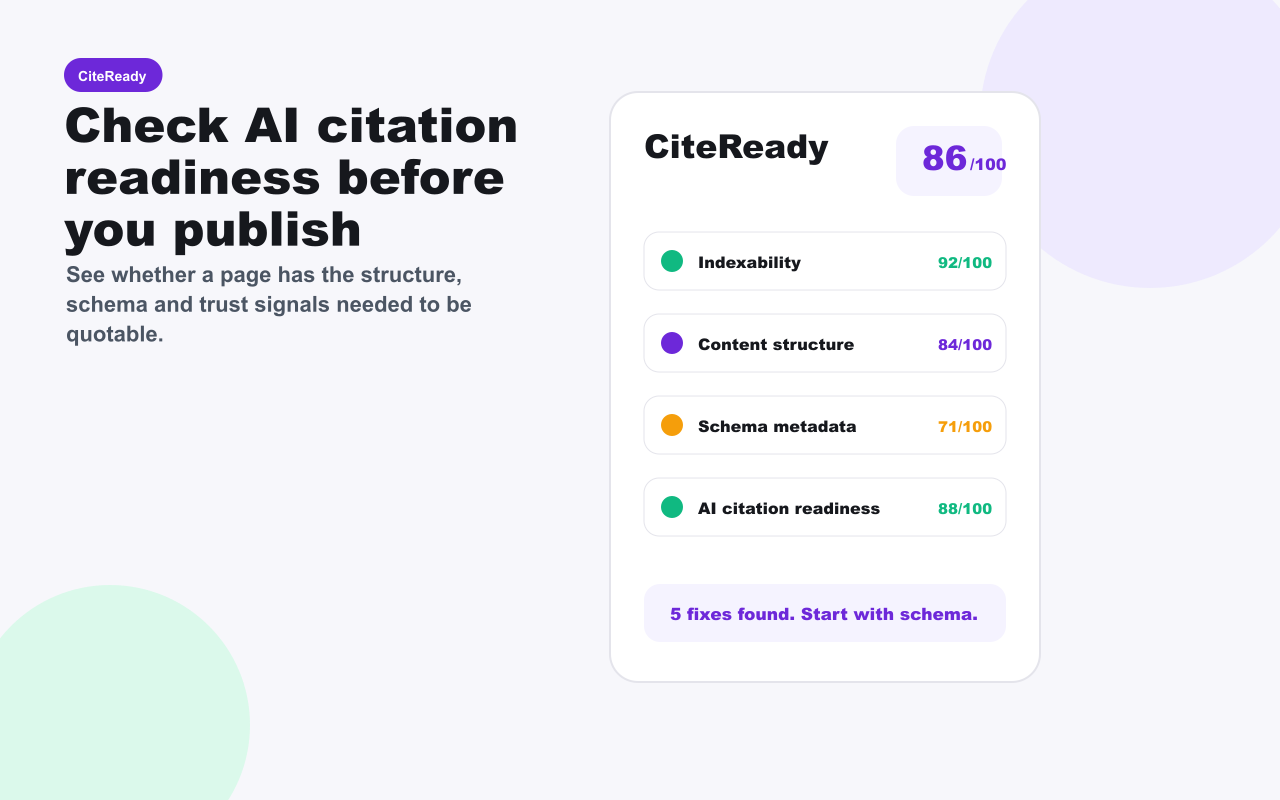
See whether a page has the content structure, source signals and trust cues that make it easier to quote.
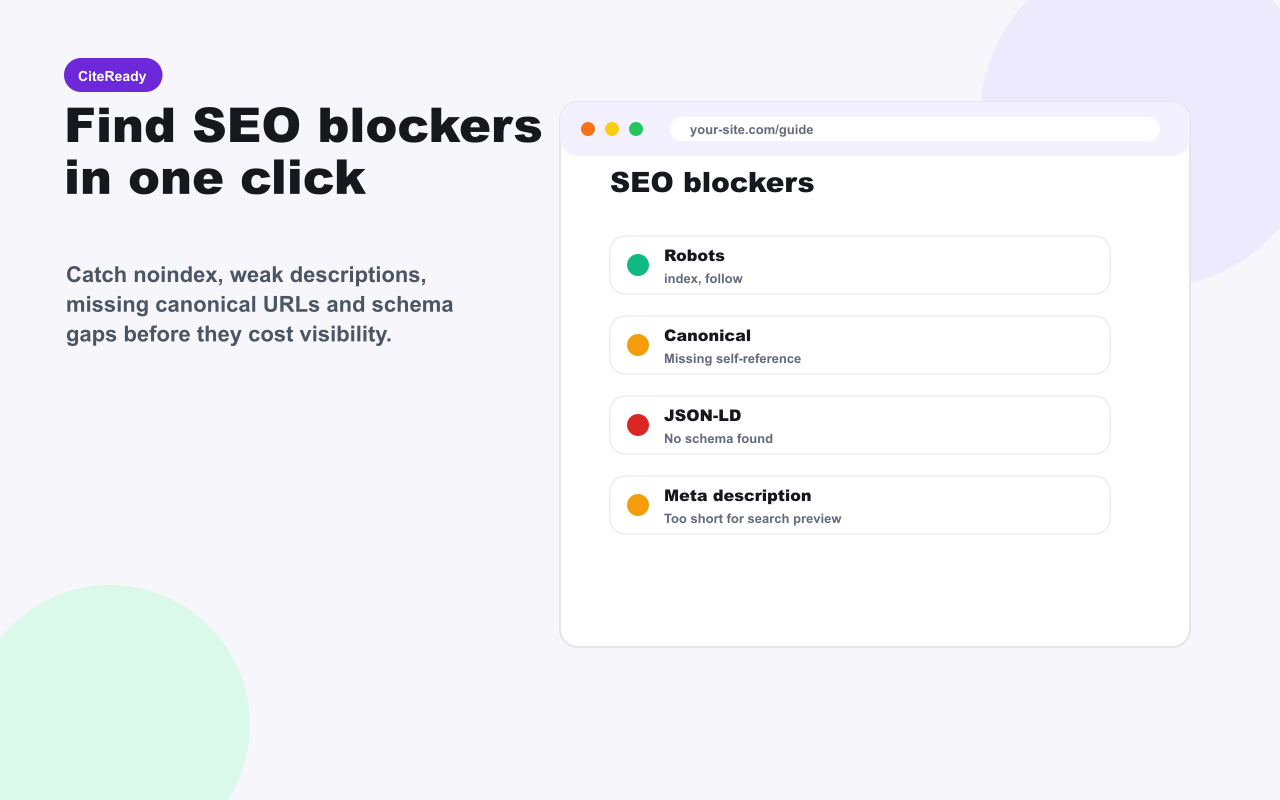
Audit title, meta description, canonical URL, robots directives, heading structure and Open Graph metadata.
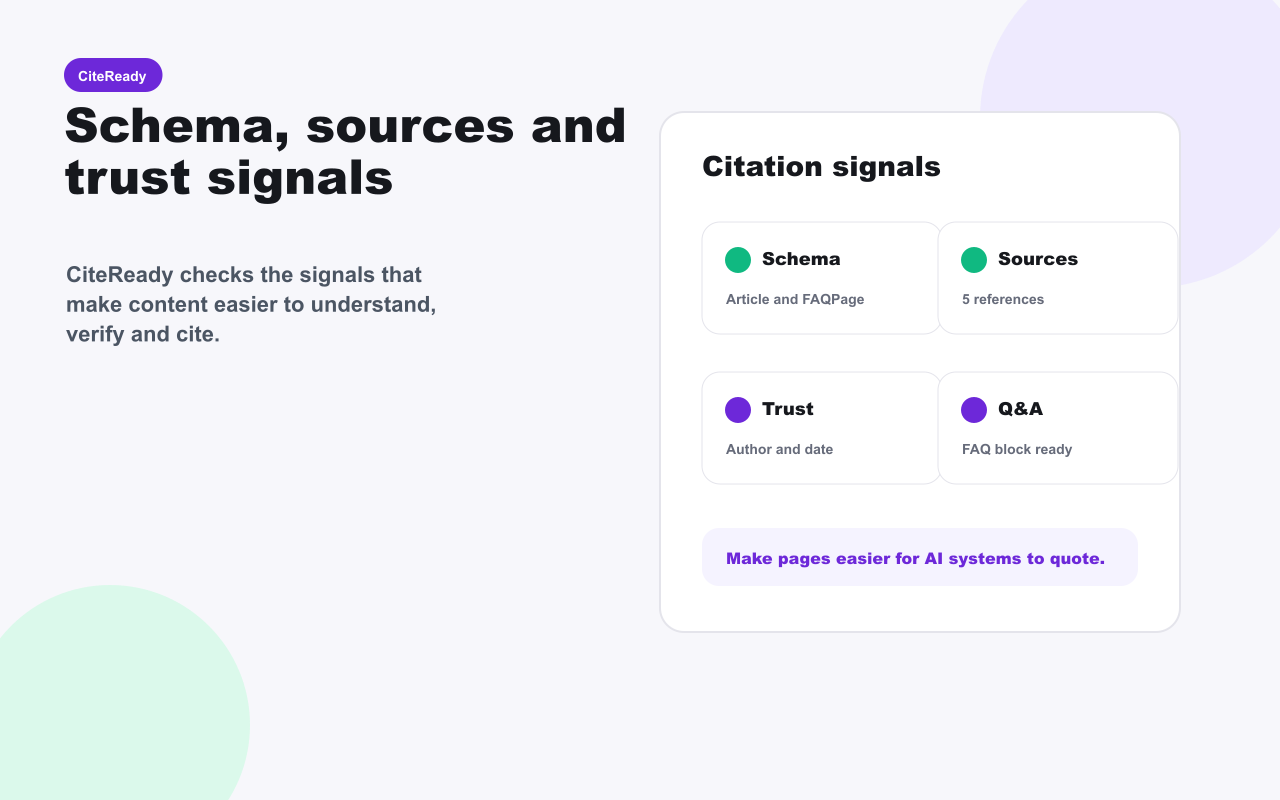
Check JSON-LD, FAQPage, Article, Organization and other structured data signals that help machines understand the page.
Spot missing external references, author signals, updated dates and answer blocks before publishing.
Check whether the site exposes discoverability hints that can help AI systems and agents understand available resources.
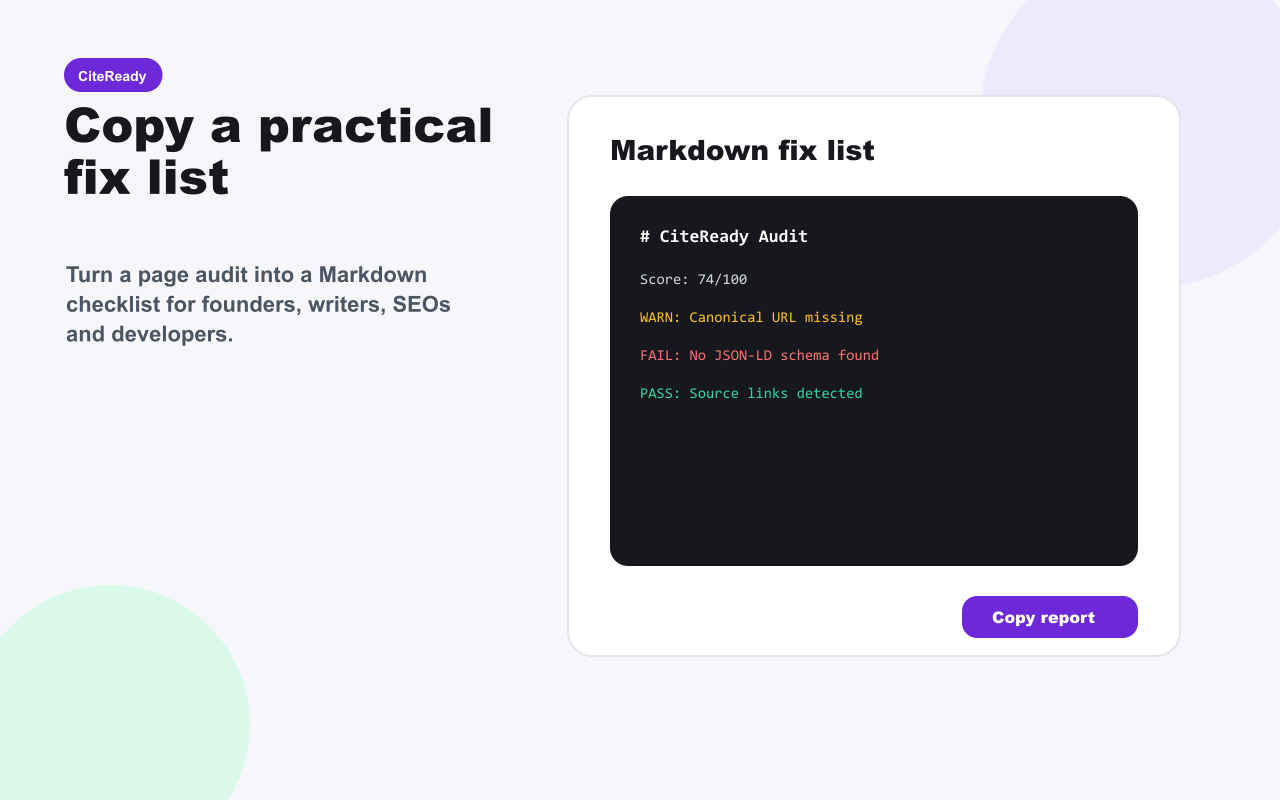
Copy a practical checklist for writers, SEOs and developers instead of sending a vague score screenshot.
CiteReady is a local-first AI SEO and GEO auditor for Chrome. It checks whether the current page has the SEO, schema, source and trust signals needed to be easier for search engines and AI answer engines to understand.
AI citation readiness means a page has clear answer blocks, structured data, sources, author signals, freshness cues and crawlable metadata that make it easier for AI systems to verify and quote the content.
GEO, or generative engine optimization, is the practice of making content more discoverable, extractable and citable by AI answer engines such as ChatGPT search, Perplexity, Google AI Overviews, Gemini and Copilot.
Start with crawlable metadata, clear H1 and H2 structure, JSON-LD schema, external source links, author and updated-date signals, FAQ blocks and concise answer passages that work without surrounding context.
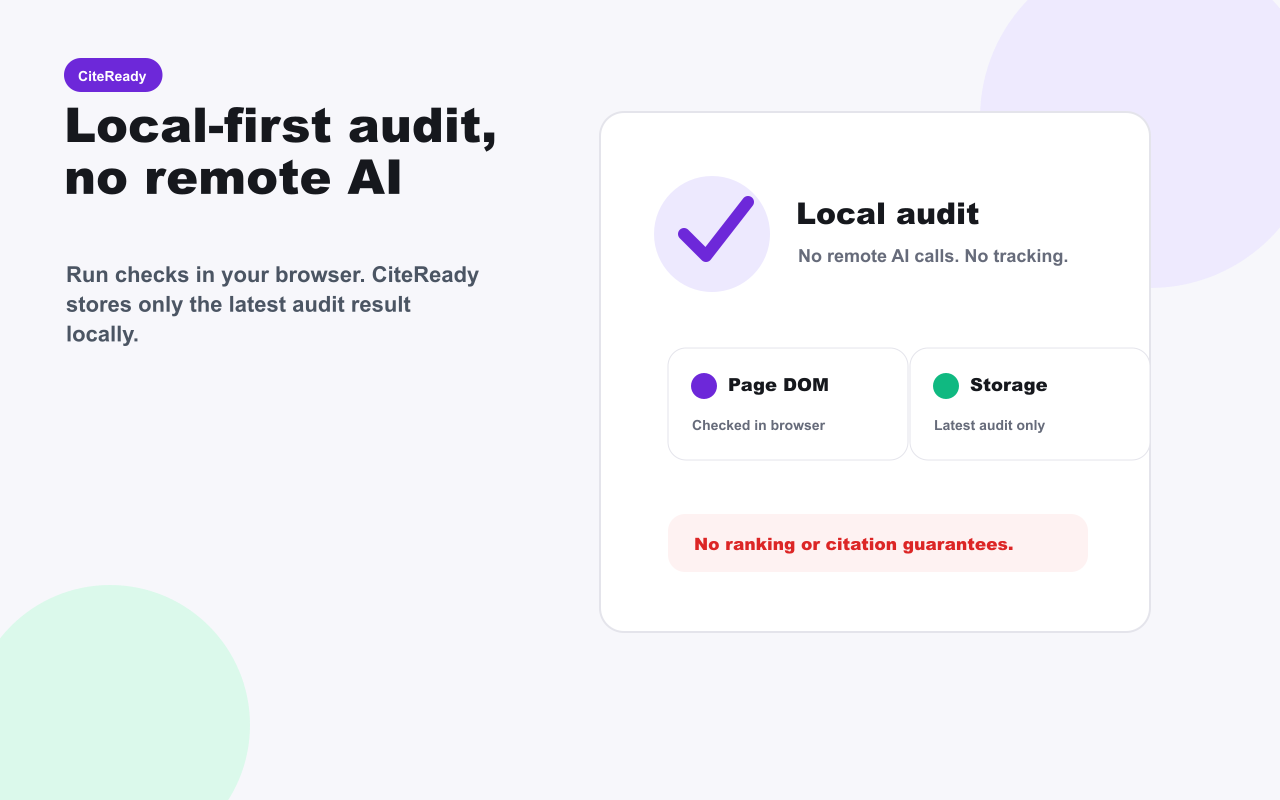
No. CiteReady does not guarantee Google rankings, AI Overviews placement or LLM citations. It gives a practical readiness checklist for improving the page.
No. CiteReady v1 runs checks locally in the browser and does not send page content to ChatGPT, Gemini, Claude, Perplexity or any remote AI service.
CiteReady checks title, description, canonical, robots signals, headings, schema, Open Graph, source links, author/date trust signals, FAQ readiness, sitemap hints and llms.txt discovery hints.
CiteReady is built for founders, marketers, SEO operators, agencies, developers and content teams that need a page-level AI visibility checklist before publishing.
Yes, but it is focused on page-level SEO and AI citation readiness. It is not a full rank tracker, backlink database or crawling suite.
Yes. CiteReady can copy a Markdown fix list so the audit can be shared with writers, SEOs or developers.
Last updated: May 8, 2026